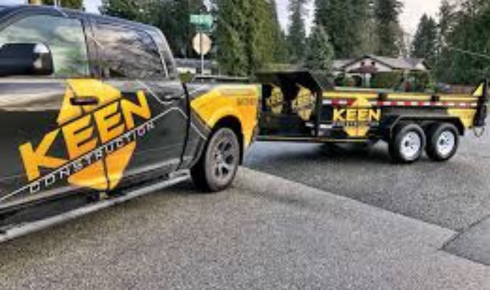
There’s a certain stillness to a parked trailer. It doesn’t rush, doesn’t compete for attention — it just sits there, part of the scene. And yet, somehow, it gets noticed.
Maybe it’s the size. Maybe it’s the way it occupies space without apology. Or maybe it’s the design — something about it that feels deliberate, even if you only glance at it for a second.
Either way, trailers have slowly become more than just functional. They’ve become expressive.
When Work Vehicles Start Saying Something
Trailers were never meant to be marketing tools. They were built to haul, to store, to move things from one place to another. But like many practical things, they evolved.
Businesses began to see potential — not in changing the function, but in enhancing the presence.
A thoughtful trailer wrap installation turns a plain surface into something meaningful. Not just decorative, but purposeful. It’s not about covering the trailer; it’s about giving it a voice.
And interestingly, when that voice feels natural, people listen. Or at least… they notice.
The Advantage of Being Unavoidable
Unlike smaller vehicles, trailers don’t disappear into the background as easily. They’re large, steady, often parked in visible places for extended periods.
Which means people have time. Time to look, to read, to absorb.
That’s one of the understated strengths of enclosed trailer wraps. They offer a broad, uninterrupted surface — almost like a blank page waiting to be filled. And because they’re enclosed, the design stays clean, uninterrupted by openings or gaps.
It’s a rare kind of space in a crowded visual world.
Branding That Feels Part of the Environment
There’s a fine line between advertising and presence. One demands attention; the other earns it.
Trailer wraps tend to fall into the second category. They exist within the environment rather than interrupting it. You see them while going about your day — at a job site, near a storefront, along the road.
That’s where commercial trailer wraps find their rhythm. They don’t rely on urgency or pressure. Instead, they build familiarity through repetition.
You see the same design a few times, in different places, and suddenly it feels known. Not because you tried to remember it, but because it stayed with you.
The Craft Behind the Surface
From a distance, a trailer wrap might look simple. A logo, some colors, maybe a tagline. But up close — or rather, behind the scenes — there’s more going on.
Designing for a trailer isn’t the same as designing for a flat screen. The surface might be large, but it’s not always uniform. There are rivets, seams, edges, slight variations that affect how the material sits.
Installation, too, is a careful process. It’s not just about applying a graphic. It’s about aligning it perfectly, smoothing out imperfections, ensuring everything looks seamless once it’s done.
It’s the kind of work that, when done right, becomes invisible. And maybe that’s the point.
Practical Benefits That Add Up
Beyond visibility, wraps offer a layer of protection. Trailers spend a lot of time outdoors, exposed to sun, dust, and weather conditions that slowly wear down the exterior.
A wrap acts as a barrier, taking on that wear instead of the original surface underneath. Over time, that can make a noticeable difference — especially for businesses managing multiple units.
And when the wrap is eventually removed or replaced, the trailer often looks better than expected. Not new, exactly, but preserved.
A Slower, More Reliable Form of Exposure
Modern marketing often feels fast-paced. Campaigns come and go, trends shift, platforms change. It can be exhausting to keep up.
Trailer wraps operate differently. They’re steady. Once they’re out there, they continue to do their job without needing constant attention.
No daily budgets, no performance metrics to obsess over. Just consistent, real-world visibility.
And in a way, that consistency feels… grounding.
The Human Layer Beneath It All
Every trailer on the road represents effort. A business trying to grow, a team trying to deliver, a person trying to make something work.
Wrapping that trailer is part of that story. It’s a way of showing up, of being visible in the spaces where people live and work.
And maybe that’s why it resonates. Not because it’s clever or flashy, but because it feels real.
Closing Thoughts
We don’t always think about the things we notice. The designs that catch our eye, the names that become familiar, the visuals that quietly linger in our minds.
Trailers, with their size and presence, have a unique way of leaving those impressions behind.
They don’t chase attention. They hold it — just long enough to be remembered.