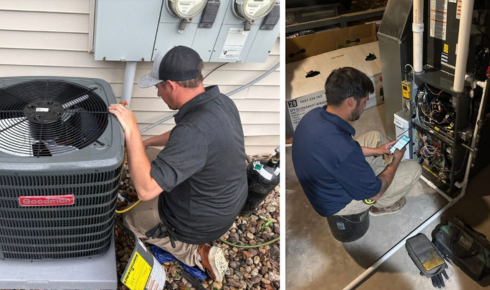
There’s a strange kind of pause that happens when your heating or cooling system doesn’t behave the way you expect. You notice it in passing—maybe the room isn’t cooling as quickly, or the air feels a bit heavier than usual. Nothing dramatic, just… different.
And like most things, you give it a moment. Maybe it’ll fix itself.
Sometimes it does. But sometimes, that small hesitation turns into something you can’t ignore anymore.
The Moment You Realize It’s Not Just a Glitch
We’ve all been there. You adjust the thermostat once, then again, and then you start paying attention in a way you didn’t before. The system runs longer. The airflow feels weaker. Maybe there’s a sound you don’t remember hearing.
That’s usually the point where people consider making an hvac service request.
Not because something has completely failed, but because it doesn’t feel right anymore. And honestly, that instinct matters more than most people realize. You don’t need a full breakdown to justify getting something checked.
Related perspective: The Little Water System Tasks Most Homeowners Forget Until Something Feels Off
Sometimes, catching an issue early is what keeps it from becoming a bigger, more expensive problem.
Waiting vs. Acting: The Quiet Debate
There’s always that internal debate—should you call someone now, or give it a little more time?
It’s understandable. No one wants to overreact. But systems don’t usually drift off course without a reason. Small inefficiencies tend to build, not disappear.
A slight delay in performance might not seem urgent, but it can point to something developing behind the scenes. Dust buildup, worn components, or airflow restrictions—all of these can start small and grow quietly.
And the longer they’re left alone, the harder they can be to fix.
When It Can’t Wait Anymore
Then there are moments when hesitation isn’t really an option.
Related perspective: From Street to Street: Why Your Water Feels Different Depending on Where You Live
The system stops completely. The house gets too hot or too cold too quickly. Or something happens late at night when everything else is already closed.
That’s when emergency service becomes more than just a feature—it becomes a necessity.
Because in those situations, waiting until the next day doesn’t always make sense. Comfort isn’t just about convenience—it’s about safety, especially during extreme weather.
There’s a certain relief in knowing help is available when you need it most. Not in a few days. Not next week. But now.
The Value of Talking to the Right People
When something goes wrong, it’s not just about fixing it. It’s about understanding what happened—and making sure it doesn’t happen again.
That’s why choosing when to contact hvac company matters just as much as choosing which one.
Related perspective: Why Reliable Plumbing Service Starts With Clear Communication
A good technician doesn’t just solve the immediate issue. They look at the system as a whole. They ask questions. They explain what they’re seeing, not in complicated terms, but in a way that actually makes sense.
And that kind of interaction builds trust. You don’t feel rushed. You don’t feel like just another job.
You feel like your system—and your comfort—actually matters.
The Small Signals We Overlook
Here’s the thing most people don’t realize: HVAC systems are pretty good at sending signals before they fail.
They just don’t send them loudly.
A slight increase in energy bills. Uneven temperatures between rooms. Air that feels different, even if you can’t explain how.
Related perspective: Why Clean Water at Home Is More Than a Luxury—It’s Something You’ll Appreciate Every Day
These are easy to ignore, especially when life gets busy. But they’re often the earliest signs that something isn’t quite right.
Paying attention to them doesn’t mean overthinking—it just means being aware.
Maintenance: The Quiet Middle Ground
Not every situation requires a repair, and not every system is on the verge of breaking down. There’s a middle ground that often gets overlooked—routine maintenance.
It’s not urgent, not dramatic, but it’s effective.
Regular check-ups keep systems running efficiently. They catch small issues before they grow. And they reduce the chances of needing emergency help later.
It’s less about reacting and more about staying ahead.
Related perspective: Why Clean Water Starts with Better Planning, Not Better Luck
Comfort Isn’t Just About Temperature
We tend to think of HVAC systems in simple terms—hot or cold, on or off. But comfort is more layered than that.
It’s about how evenly air moves through your space. How fresh it feels. Whether certain areas feel different from others.
A system can technically be working, but still not be performing well.
And that’s often what prompts that first moment of doubt—the feeling that something’s just a little off.
Final Thoughts
Most of us don’t think about our HVAC systems until they give us a reason to. And that’s perfectly normal.
But paying attention to small changes—acting when something feels off, rather than waiting for it to fail—can make a big difference.
Whether it’s a simple service request, a routine check-up, or an urgent repair, the goal is the same: to keep your space feeling the way it should.
Because when everything is working properly, you don’t notice it at all.
And really, that’s the best kind of comfort there is.
