Most homeowners don’t think much about their plumbing until a faucet starts leaking, a pipe develops a problem, or an unfamiliar stain appears around the sink. Water seems harmless enough. It’s clear, it flows, and most of the time, we simply turn on the tap and move on with the day.
But water has chemistry, and that chemistry matters.
When water is too acidic or chemically unbalanced, it can interact with plumbing materials in ways that aren’t immediately obvious. Over time, those small interactions may contribute to corrosion, staining, unpleasant tastes, and premature wear on fixtures.
The good news is that understanding the problem early can make a big difference. You don’t necessarily need a complicated treatment setup. You need the right information first.
When Water Starts Affecting Your Plumbing
Plumbing systems are designed to handle water every day, but they’re not completely immune to the chemistry of that water. Certain conditions can make metal components more vulnerable to corrosion, particularly when water has characteristics that encourage aggressive interaction with plumbing surfaces.
Copper pipes, brass fixtures, faucets, and other metal components can all be affected under the right conditions. The signs may begin quietly. Perhaps the water develops a slightly metallic taste. Maybe a faucet starts showing unusual discoloration. Or you notice that an older section of plumbing seems to need repairs more often than expected.
None of these signs automatically proves that water chemistry is responsible. Still, they’re worth investigating.
And that’s where testing becomes much more useful than guessing.
Why Corrosion Deserves Attention
Corrosion isn’t just an aesthetic nuisance. It can gradually affect plumbing components and, in some situations, contribute to leaks or deterioration.
For homeowners dealing with aggressive water, stopping corrosion isn’t about finding a temporary cleaning product and hoping for the best. The more useful approach is to understand what is causing the water to interact with the plumbing in the first place.
Water pH, alkalinity, dissolved minerals, temperature, and plumbing materials can all influence corrosion behavior. That’s why two houses on the same street can sometimes have noticeably different plumbing experiences.
If corrosion keeps returning after a fixture has been cleaned or replaced, the water itself deserves a closer look.
Those Blue-Green Stains Aren’t Always Random
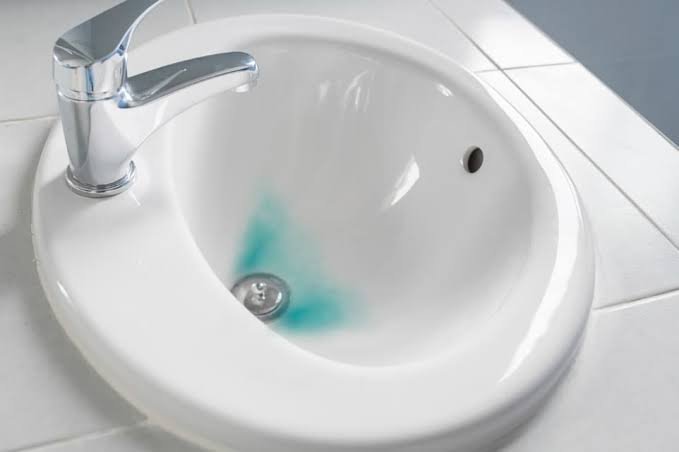
Few household stains are as recognizable as the blue-green marks that can appear around copper plumbing fixtures. They may show up near faucets, drains, joints, or other areas where water regularly comes into contact with metal.
For some homeowners, removing blue-green stains becomes a regular cleaning job. Scrub the area, make it look better, and then, frustratingly, watch the discoloration return a few weeks later.
That recurring pattern is the important part.
Cleaning can improve the appearance of a fixture, but it doesn’t necessarily address the underlying reason for the staining. If water chemistry is contributing to corrosion or metal interaction, treating only the visible stain is a bit like wiping up a puddle without checking where the water is coming from.
A recurring stain deserves more than another round of scrubbing.
Start With a Water Test
Testing is often the least glamorous part of water treatment, but it’s arguably one of the most useful.
A comprehensive water analysis can provide information about pH, alkalinity, hardness, iron, manganese, dissolved solids, and other characteristics that may be relevant to the home’s plumbing.
For private well owners, testing is especially important because groundwater chemistry can vary considerably. Seasonal changes, local geology, and other environmental factors may influence what comes out of the well.
The results don’t need to be intimidating. A qualified water-treatment professional or laboratory can help explain what the numbers mean and which issues actually deserve attention.
The goal is simple: identify the cause before choosing the solution.
Understanding the Role of pH
pH is one of the first measurements homeowners often encounter during water testing. The scale ranges from acidic conditions on one end to alkaline conditions on the other, with neutral water around the middle.
Water that is too acidic may be more likely to interact aggressively with certain metal plumbing materials. But pH shouldn’t be considered in isolation.
Alkalinity and mineral content can change how water behaves, so a pH reading by itself doesn’t provide the entire picture. That’s why a good water test typically looks at several related measurements.
It’s tempting to see one number and immediately shop for a treatment system. Resist that urge. Water chemistry is a team sport; one measurement rarely tells the whole story.
Neutralizing Aggressive Water
If testing confirms that water chemistry is contributing to corrosion, a neutralization system may be one possible solution.
Neutralizing equipment typically uses an alkaline media to increase the water’s pH as it passes through the treatment tank. Calcite is commonly used for this purpose, although the appropriate media and system design depend on the specific water chemistry.
Sizing is important, too. Household water demand, flow rate, acidity, alkalinity, and media consumption all affect how well a system performs.
A system that isn’t properly matched to the home’s needs may not provide consistent results. In other words, bigger isn’t automatically better. The right equipment is the equipment designed around the actual water conditions.
Looking Beyond One Faucet
One common mistake is thinking about water treatment only where the problem is visible.
A stained faucet may be the first thing you notice, but the water has already traveled through the plumbing system before it reaches that fixture. If the underlying chemistry is affecting the plumbing, treating only one tap may not address the broader issue.
This is why whole-home treatment can sometimes make sense when the water-quality concern affects the entire supply.
The right solution depends on the source and the problem, though. A point-of-use filter can be perfectly appropriate for certain drinking-water concerns, while other issues may require treatment closer to where water enters the house.
Protecting Fixtures, Appliances, and Everyday Comfort
Water chemistry can influence more than pipes.
Faucets, showerheads, water heaters, washing machines, dishwashers, and other appliances all spend years interacting with household water. When water quality is well matched to the plumbing and equipment, there’s less reason to worry about avoidable chemistry-related wear.
That doesn’t mean a treatment system makes appliances last forever. Nothing does. But addressing a known water-quality problem can be one sensible part of a broader maintenance strategy.
And there are everyday benefits, too. Cleaner fixtures, fewer recurring stains, better-tasting water, and less frustration at the sink might sound like small things. Add them together over several years, and they don’t feel so small.
Maintenance Still Matters
Once a treatment system is installed, it needs attention. Neutralizing media may need to be replenished, filters require replacement, and water chemistry should occasionally be checked to make sure the system is still doing its job.
Skipping maintenance can gradually undermine an otherwise good setup.
It’s useful to keep a simple record of filter changes, service visits, and water tests. Nothing fancy. A note on your phone or a small calendar reminder is usually enough.
If water conditions change, revisit the treatment plan. A system that was appropriate years ago may need adjustment after changes in the well, plumbing, household water use, or other conditions.
Think About the Whole House
Good water treatment is ultimately about more than solving one annoying stain.
Protecting your entire home starts with understanding how water behaves from the source all the way to the kitchen faucet, shower, laundry room, and water heater. When you know what’s in the water and how that chemistry interacts with your plumbing, treatment decisions become much more straightforward.
You may discover that the issue is minor and requires little intervention. Or you may find that a targeted treatment system is worth installing. Either way, you’ll be making the decision based on evidence instead of guesswork.
That’s a better place to be.
Water is supposed to work quietly in the background of everyday life. You shouldn’t have to think about it every time you turn on a faucet. By testing the water, paying attention to recurring signs, and addressing the underlying chemistry when necessary, you can make your plumbing system easier to maintain and your home a little more comfortable.
Sometimes the smartest home improvement isn’t something you can see. It’s simply making sure the water moving through your house is working with your plumbing, rather than slowly working against it.